- Home
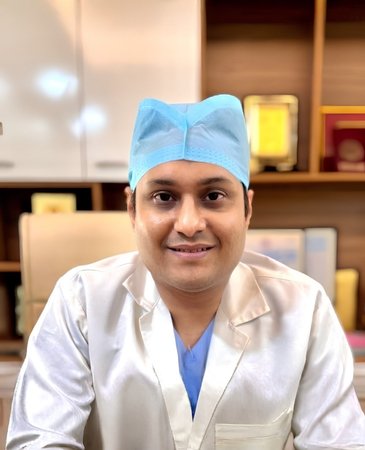
Dr. PIYUSH TEWARI
M.S. AFMSFellow NARAYANA NETHRALAYAWork experience- Armed Forces Medical Services
- Narayana Nethralaya, Bangalore
- Shroff Charity Eye Hospital, Delhi
- Sitapur Eye Hospital, Sitapur, UP
- LASIK
- Cataract Surgery
- Toric intraocular lenses
- Multifocal and EDOF implants
- Implantable Collamer Lenses (ICL)
Dr. PRERNA MATTA
DNB. MNAMSFELLOW MOORFIELD’S (UK)Work experience- Safdarjung Hospital Delhi
- Apollo hospital Delhi
- Tirupati Eye Centre Noida
- Glaucoma Treatment
- Anterior Segment surgery
- Cataract Surgery
 https://www.youtube.com/watch?v=2KRw-SK3d7k
Types of Lenses for Cataract Surgery
This video describes the types, advantages and cost of lenses in cataract surgery Or lens replacement surgery or motiyabind. The information provided is solely for Educational purposes. These procedures have been performed by our experienced surgeons at New Delhi Ghaziabad and Noida. Financial interest : NoneFrequently asked questions on cataract surgery
What is Cataract? Cataract can be defined as cloudiness or loss of transparency of a natural crystalline lens in the eye. Patient suffering from Cataract have difficulty in seeing objects clearly. There are many causes of cataract including ageing trauma diabetes and other diseases. When do you know that Cataract is operable? If your vision has dropped significantly. After a complete examination your doctor will also tell you if your cataract is significant and if it requires surgery or not. What is the treatment for Cataract? The only successful treatment for Cataract is cataract surgery. There are no medicines one can take to cure cataract. The only option is surgical intervention, which nowadays is very easy and simple to perform. Generally people are afraid to get operated on any organ of the body. But cataract surgery is like a dressing on a simple wound. Cataract surgery is essential to restore normal or even better vision if done correctly. Will I have to wear glasses after cataract surgery? understanding or Optical system. Since birth our eyes have an autofocus mechanism and it gives Us the ability to see objects at a distance, at an intermediate range, and up close for reading. As age progresses we lose our autofocus mechanism and rely on reading glasses for intermediate and near work. This is called presbyopia and it is corrected by reading glasses, which can either be progressive or bifocal glasses. While treating cataract we have the option to give you a good distance, intermediate and near vision. Depending upon your needs and lifestyle we try to give you as much spectacle free vision as possible. How much time is needed for cataract surgery? Usually cataract surgery does not take more than 15 to 20 minutes. But depending upon your age and grade of cataract the time may vary. Will I be discharged on the same day? Or is admission needed for cataract surgery? Cataract surgery is a day care procedure. It does not require overnight admission. Generally patients are discharged within 3 to 4 hours. Can glasses or eye drops cure cataract? No. however in certain types of cataract glasses temporarily improve eyesight. but they are definitely not a replacement surgery. No eye drops anywhere in the world can cure a cataract, lubricant drops may temporarily give slight clarity, surgery is the only scientifically proven method to restore vision after cataract, What tests are required before cataract surgery? Eye testing such as (lens power) biometry, retinal scans (oct), eye length (immersion scan), ultrasound (b-scan), fundus photograph etc are done before we can give advice on cataract surgery. other blood investigations like hemogram, hiv, HCV, HBV ECG etc are required (to be done from pathology lab). How will i know which lens is used for my surgery? After surgery, we provide you with a card with details of your lens. Is Cataract covered under insurance? Consult our counselor for the same. Yes, Cataract surgery is covered under insurance. Kindly consult our counsellor for the same. What is astigmatism and do I need toric lenses? Astigmatism is the cylindrical power in your eye. Normal lenses (monofocal, multifocal, trifocal, EDOF) only correct the spherical component of your eye power, The cylindrical component is called astigmatism and if it is more than 2 dioptres then we recommend you to opt for toric lenses for better quality of vision. What are the different types of lenses for cataract surgery?1. Monofocal IOL:
These lenses are designed to give you a good distance vision only, with these lenses you have to use spectacles of around 2.5D to be able to read text and do fine work for near. These are very basic lenses and most commonly used even today. There is a large variety of monofocal lenses example Yellow Coated lenses. A Spherical lenses, extended range Lenses, advanced optics lenses.
2. Multifocal IOL:
These lenses are designed to give you a good distance and near vision but they have limited role in intermediate vision like using laptop or desktop screens. These lenses are most suited for patients above the age of 50, who don’t indulge in extensive computer work and nighttime driving. These lenses give you the benefit of almost spectacle free vision throughout the day. A minor disadvantage of these lenses is that they produce occasional glare and haloes which is significant only at night time driving.
3. Tri focal lenses:
These lenses give you a wide range of vision like driving using laptop screens to reading content on mobiles or tablets. Trifocals are highly recommended for any patient with healthy eyes. with an active lifestyle.
Note: Night time driving gives you a good vision but very minimal glare and haloes may occur which is usually corrected by an anti glare glass.
4. EDOF (extended depth of focus) LENSES.
EDOF is the best available technology of date, simply put they are the most advanced lenses available. They have little to no glare or haloes at night time driving and patients are extremely comfortable at all ranges of vision that in distance intermediate and near.
Currently we are using two EDOF lenses. SIFY – MINIWELL &
ALCON VIVITY.
5. SEMI EDOF LENSES: These lenses give partial need for near vision glasses. Upto +1 to +1.25 D. eg Biotech Advanced Optics, Magnificent.
#TORIC IOL: Any of the above lenses can customized into a toric lens. The need of toric lens is only assessed after lens power calculations and it is judged by the surgeon only. Healthy eyes with a clear cornea can benefit from toric lenses.
Due to cataract a person might face the following difficulties in daily life.
1. Clouded, blurred or dim vision
2. Increasing difficulty with vision at night
3. Sensitivity to light and glare
4. Seeing “halos” around lights
5. Frequent changes in spectacles or contact lens prescription
6. Fading or yellowing of colors
7. Double vision in single eye
8. Headache