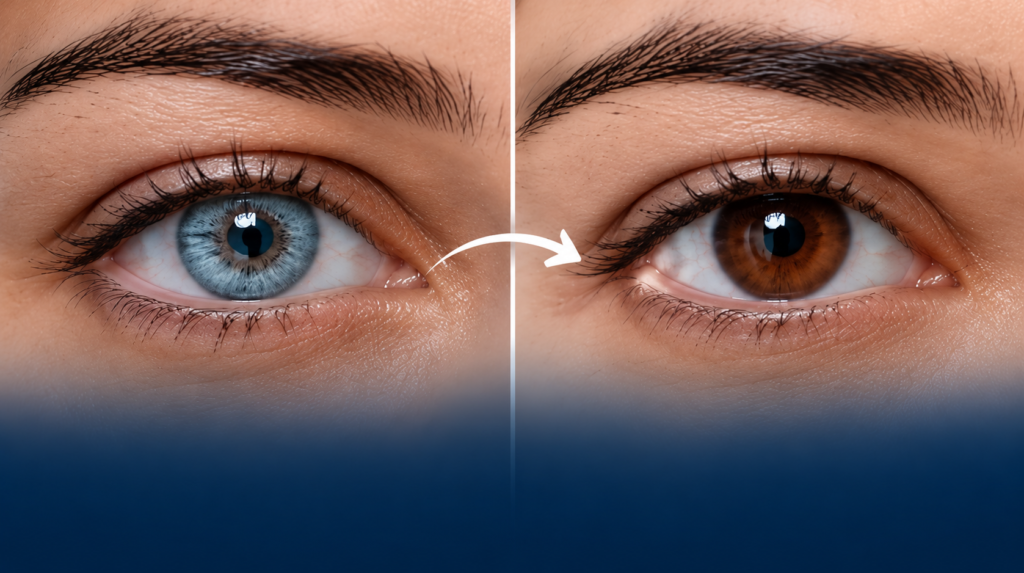

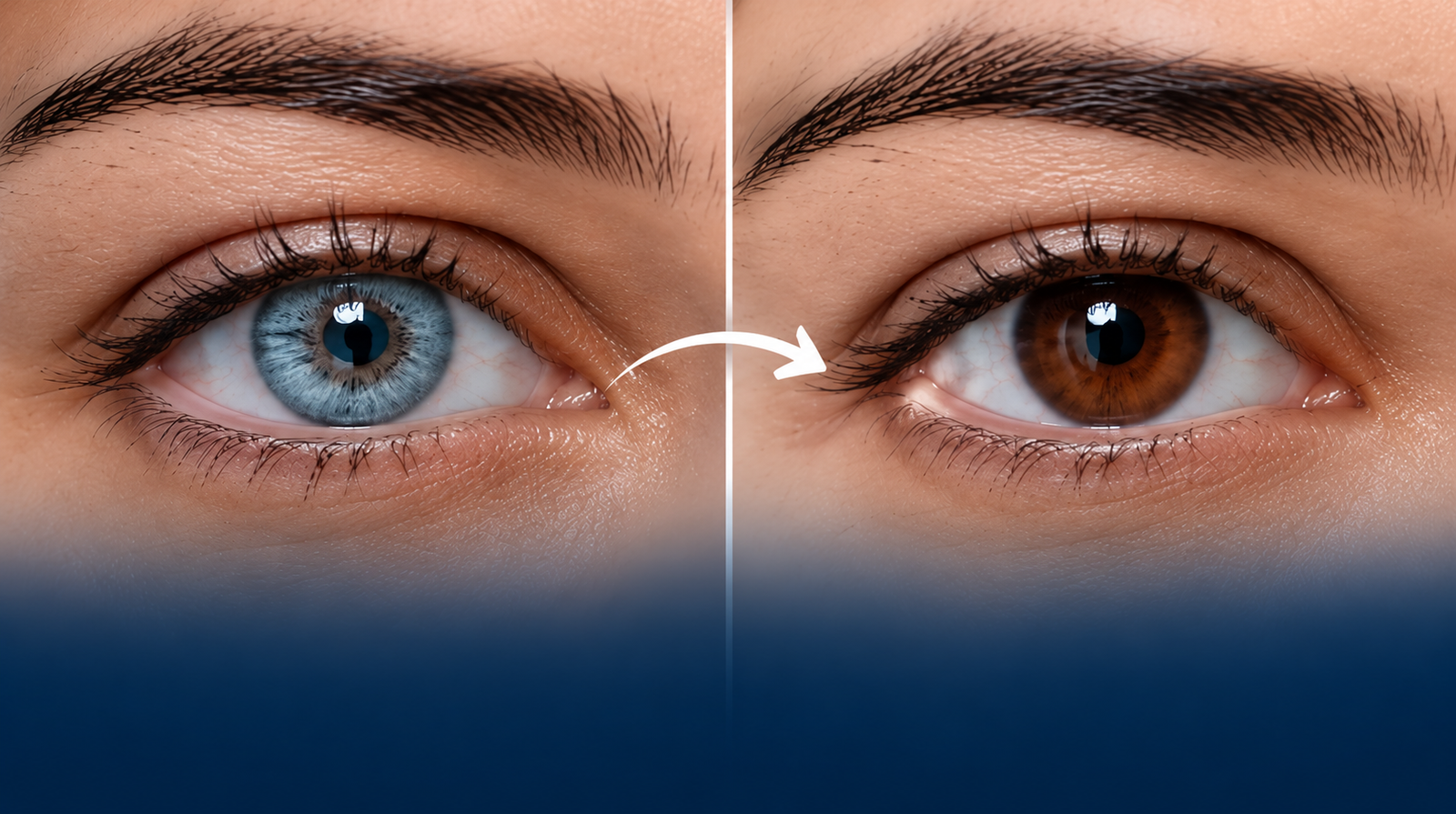
A cosmetic corneal tattoo is no longer a permanent, all-or-nothing decision. At Tewari Eye Centre, we now remove keratopigmentation pigment and restore a clear cornea without a corneal transplant.
Over the last decade, thousands of people worldwide have changed their eye colour with keratopigmentation, often called a “corneal tattoo” or cosmetic eye colour change. Many are happy with the result. But a growing number are not: the colour looks artificial, fades unevenly, or needs repeated top-ups that cost money, time and comfort.
Until recently, these patients were told there was little that could be done. This article explains what keratopigmentation is, why people choose to reverse it, why reversal was long considered impractical, and how our reversal procedure works.
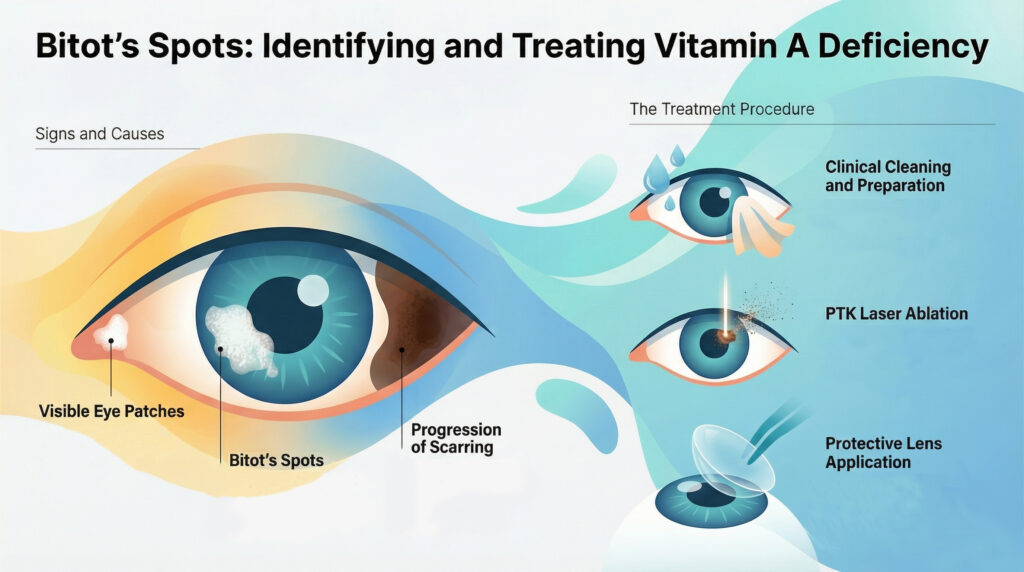
The surgical treatment process is meticulous, systematic, and relies on precision laser technology. First, the medical team begins the procedure by thoroughly cleaning the entire surface of the eye. Once the eye is properly prepared, the surgeon utilises a specialised laser treatment, specifically working within a PTK profile to perform targeted surface ablation. This advanced laser carefully and completely wipes out all the dead, scarred skin that makes up the visible patch on the eye. Finally, to protect the newly treated, delicate area and to aid in a smooth healing process, a therapeutic contact lens is carefully placed directly over the eye.
What is keratopigmentation?
Keratopigmentation (KTP) is a tattoo placed inside the cornea, the clear front window of the eye. It does not change the iris itself; it paints a coloured ring in front of it, so the eye appears to be a different colour.
In the cosmetic version, a femtosecond laser cuts a thin ring-shaped tunnel inside the corneal stroma, typically at a depth of around 200 microns from the surface. The surgeon then opens the tunnel and fills it with micronized mineral pigment in the chosen shade. A clear central zone is left over the pupil so that vision passes through untouched.
The technique began as a reconstructive tool. Surgeons have long used corneal tattooing to disguise white corneal scars, blind or disfigured eyes, and iris defects that cause glare. Professor Jorge Alió’s group in Alicante introduced the femtosecond laser–assisted method in 2010, and in recent years it has been marketed widely as a purely cosmetic eye colour change.
Published results in carefully selected patients are often good. But reviews in 2025 and 2026 repeatedly note that long-term data for purely cosmetic use is still limited, and that pigment stability, durability and tolerance remain open questions.
Why patients want it reversed
The patients who come to us for reversal usually describe one or more of these problems:
- An artificial look. The ring can look flat, opaque or “painted on”, especially in close-up photos, bright light, or when the shade does not suit the face.
- Constant fading. Pigment can lighten or turn patchy over months. Laboratory work published in 2026 suggests one reason: corneal cells gradually engulf the pigment particles, which may contribute to fading.
- Repeated enhancements. Fading means touch-up sessions. Each one adds cost, discomfort, recovery time and, often, travel abroad. In one 2025 series, 17 of 85 eyes needed an additional session for fading or dissatisfaction.
- Light sensitivity and glare. Photophobia is one of the most frequently reported side effects of cosmetic keratopigmentation.
- Effects on vision and the cornea. A large 2025 series found small but measurable drops in contrast sensitivity and endothelial cell count. Individual reports describe induced refractive error, aberrations and, rarely, corneal ulceration.
- Imaging concerns. Some iron oxide–based pigments can create MRI artefacts or shift under a strong magnetic field.
- A change of heart. Some people simply want their natural eyes back.
Why removal was long considered impossible
Keratopigmentation was sold as permanent, and for years that was effectively true. The pigment sits deep in the stroma, wedged between collagen layers, not on the surface where it could be wiped or scraped away.
That is why simple approaches fail. Even in accidental corneal tattooing from eyelid make-up, surgeons have found that scraping removes only part of the pigment, because particles work their way between the stromal lamellae. Skin-tattoo lasers are not an option either: their energy would be absorbed inside a structure that must stay perfectly clear.
For a patient who wanted the colour gone, the traditional answer was a corneal transplant (keratoplasty), replacing the pigmented tissue with donor cornea. That means a major operation, long recovery, lifelong rejection risk and dependence on donor tissue, which is a heavy price for a cosmetic regret.
Only in the last year or two have cornea and refractive surgeons begun publishing laser-based reversal techniques. The surgical approach we use at Tewari Eye Centre belongs to this new generation of transplant-free reversal.
How we reverse keratopigmentation at Tewari Eye Centre
Our reversal uses lasers, not a transplant. We open the cornea under the largest possible flap and use specialised laser photoablation to clear the pigment, aiming for a cornea that looks as it did before the tattoo.
The procedure is performed by Dr Piyush Tewari, a cornea and refractive surgeon with a fellowship from Narayana Nethralaya, Bangalore, and a special interest in LASIK and ICL surgery. It draws directly on the same precision laser skills used in refractive surgery every day.
- Detailed mapping. We measure corneal thickness, image the pigment ring on anterior segment OCT, and map its depth and extent so that the plan fits your cornea.
- The largest possible flap. A laser-created flap is made with the widest diameter your cornea safely allows. A large flap matters because the pigment ring lies in the outer cornea; a standard LASIK-sized flap would leave pigment untreated at the edges.
- Laser photoablation of pigment. With the flap lifted, our specialised lasers ablate the pigmented tissue layer by layer under direct view, until the bed is clear.
- Flap repositioning. The flap is laid back in place, where it seals naturally. No stitches and no donor tissue are needed.
The goal is a clean, transparent cornea with your natural iris colour visible again. Because the procedure works on the same principles as laser vision correction, it can also be planned to reduce any refractive error or irregularity the original tattoo caused.
Are you a candidate?
Most patients with femtosecond laser–assisted cosmetic keratopigmentation can be assessed for reversal, but the final decision depends on how much healthy cornea you have to work with. Removing pigment means removing some corneal tissue, so safety comes first.
At your evaluation we check:
- Corneal thickness (pachymetry) across the whole cornea, including under the pigment ring.
- Pigment depth and spread on anterior segment OCT.
- Corneal shape on topography and tomography, to rule out thinning or ectasia.
- Endothelial cell count on specular microscopy.
- Vision, refraction and eye pressure, plus a check for dry eye, inflammation or infection.
- The type of pigment and technique used, if you have records from your original surgeon. Please bring them.
You may not be suitable if the cornea is too thin, if the pigment sits very deep, or if there is active infection or scarring. In those cases we will explain the alternatives honestly, including when a transplant may still be the safer route.
What to expect
Reversal is a day-care procedure done under numbing eye drops, much like LASIK. You go home the same day.
On the day. The laser steps take minutes per eye. You will feel pressure but not pain, and you will be awake throughout.
The first days. Expect watering, light sensitivity and a gritty feeling for a day or two. Vision is usually hazy at first and clears progressively as the flap settles. You will use antibiotic and anti-inflammatory drops and attend follow-up visits the next day, the next week and over the following months.
The result. As the cornea heals, the coloured ring is replaced by clear tissue and your natural eye colour shows through again. Final appearance and vision are judged after full healing.
Risks. Like any corneal surgery, reversal carries risks. These include infection, flap-related problems, temporary or lasting haze, dry eye, glare, a change in glasses power, and, rarely, corneal weakening. A small amount of residual pigment may occasionally need a second treatment. We discuss each of these with you, in the context of your own scans, before you decide.
Frequently asked questions
Is keratopigmentation really permanent?
It is designed to be, but many patients see fading over time, which is why touch-ups are common. Reversal is now possible for many patients, without a transplant.
Will I need a corneal transplant?
In most suitable candidates, no. Keratoplasty is reserved for corneas that are too thin or damaged for laser reversal.
Does it hurt?
The procedure is done under anaesthetic drops. Most patients describe pressure and brief discomfort rather than pain.
Will my natural eye colour come back?
Yes. Keratopigmentation never changed your iris; it only covered it. Once the pigment is cleared, your own iris colour is visible again.
Can both eyes be treated together?
This is decided case by case after your evaluation.
I had my procedure abroad. Can you still help?
Yes. Where the original surgery was done does not matter. Bring any operative notes or pigment details you have; if you have none, our scans will guide the plan.
Can I have LASIK, cataract or other eye surgery later?
Generally yes, though the reversal itself uses some corneal tissue. We plan your reversal with your future eye care in mind.
Your natural eyes, back again
A corneal tattoo you no longer want does not have to be lifelong, and it does not automatically mean a transplant. With careful assessment and precise laser surgery, many patients can have their pigment removed and their clear cornea restored.
If you have had keratopigmentation and are unhappy with the look, the fading, or the cycle of enhancements, book a consultation with Dr Piyush Tewari at Tewari Eye Centre, an NABH-accredited eye hospital with branches in Noida (Sector 55), Vaishali (Ghaziabad) and Modinagar.
References
- Alió JL et al. Femtosecond laser-assisted keratopigmentation outcomes for pure cosmetic purposes. Am J Ophthalmol Case Rep, 2025.
- Hashemi H et al. An updated comprehensive review on keratopigmentation. Int J Ophthalmol, 2025.
- Balparda K et al. Keratopigmentation in the modern era: a review of current techniques, results, and safety. Indian J Ophthalmol, 2025.
- Therapeutic keratopigmentation: cosmetic and functional outcomes. Ophthalmol Ther, 2025.
- Alió JL. Cosmetic keratopigmentation works and can be used as a new aesthetic solution to change the apparent color of the eye. Cornea, 2026.
- Jabbour S. Color at what cost? The case against cosmetic keratopigmentation in sighted eyes. Cornea, 2026.
- Gaulier A et al. Cellular and cytokine responses of corneal fibroblasts exposed to keratopigmentation inks in vitro. Exp Eye Res, 2026.
- Gaulier A et al. Magnetic resonance imaging and keratopigmentation: a systematic review and ex vivo study. Cornea, 2026.
- Uddin O et al. Severe corneal ulceration after cosmetic keratopigmentation. Cornea, 2025.
- Goldberg H et al. Inadvertent corneal pigmentation following cosmetic blepharopigmentation. Am J Ophthalmol Case Rep, 2018.
- Castanera-Gratacós D et al. Removal of a cosmetic femtosecond laser-assisted keratopigmentation. J Refract Surg, 2025.
- Song JY, Shin GY. Surgical reversal of cosmetic femtosecond laser-assisted keratopigmentation using a pupil-sparing stromal lamellar flap. Korean J Ophthalmol, 2026.
Research sourced via PubMed.
This article is for general information and does not replace a personal medical consultation. Suitability and results vary from patient to patient.
The Progression of the Condition
The biggest problem with this particular eye condition is how it relentlessly progresses over time if left unmanaged. In its initial stages, a Bitot’s spot presents merely as a very small, unassuming white patch. However, without proper intervention, it does not stay small for long. It gradually develops into a much larger, foamy or frothy-looking patch that can permanently remain on your eye as a lifelong scar. Over the years, this severe scarring can even change in appearance and colour. For instance, the eye specialists at Tewari Eye Centre recently treated a patient who originally visited the clinic hoping to undergo a standard LASIK procedure. Upon closer examination, it was discovered that the patient had a severe, prominent brown scar on their eye, which had aggressively worsened from one of these initial white patches.
The Modern Solution: Precision Laser Treatment
Fortunately, if you or a loved one are dealing with these unsightly brown or white scarred patches caused by a historic Vitamin A deficiency, there is a highly effective, modern solution. Advanced laser treatment has proven to be incredibly successful in treating and removing these stubborn, discoloured blemishes.